
Introduction
The rapid evolution of drone technology and its tactical applications in recent conflicts have starkly highlighted inadequacies in Australia’s military procurement strategies and broader defence posture. As nations worldwide adapt to emerging warfare paradigms, the Australian Defence Force (ADF) continues to rely on traditional procurement methods and outdated strategic frameworks, raising concerns about its preparedness for future conflicts.

Lessons from Ukraine and Russia: The Evolution of Drone Warfare
The Ukrainian conflict has demonstrated the transformative role of drones on the battlefield. However, the rapid uptake of low-cost drones was heavily influenced by lessons learned from the 2020 Nagorno-Karabakh War, where Azerbaijan’s extensive use of Turkish Bayraktar TB2s and Israeli kamikaze drones proved decisive against Armenian forces. This conflict set a precedent for modern drone warfare, illustrating the potential for mass-produced, affordable drones to neutralise traditional armoured and artillery units.
Facing artillery and ammunition shortages, Ukrainian forces quickly integrated low-cost, first-person view (FPV) drones into their operations. These drones, often assembled from commercially available components, have been effectively used for reconnaissance and direct strike missions, providing a cost-effective alternative to complex Western systems like the Javelin. The combination of emerging technology, battlefield necessity, and lessons from past conflicts has cemented drones as an essential part of modern warfare.
Both Ukrainian and Russian forces have rapidly developed countermeasures to each other’s drone tactics. Practical battlefield adaptations—such as chain netting, corrugated iron panels, and even 12-gauge shotguns—have evolved alongside advancements in electronic warfare (EW), anti-drone visors, turret-mounted slat armour, rubber mat shields, and active protection systems like the Arena-M. These innovations illustrate the necessity of continuous, rapid adaptation rather than reliance on static, high-cost procurement programs.
Recently, Russian forces have gained a significant advantage by their innovative use of fiber-optic controlled drones. This has allowed for high-quality, jam-resistant operations, enabling precise navigation and strikes, even within complex high-intensity environments like the Kursk salient. These advancements have rendered traditional defensive measures less effective, necessitating further rapid adaptation and innovation. By integrating these advanced drones with co-ordinated combined-arms tactics, Russia has achieved more effective control over the battlefield, underscoring the urgency for real-time innovation and tactical flexibility.
ADF Procurement: The Consequences of a Slow, Risk-Averse System
Meanwhile, the ADF lags behind, hampered by bureaucratic procurement cycles and slow-moving defence contracts while modern warfare evolves at breakneck speed. Traditional capability development approaches are no longer sufficient. The battlefield is now shaped by cheap, rapidly deployable drones and adaptive countermeasures, rather than billion-dollar weapons platforms. While the United States, United Kingdom, and even smaller nations like Ukraine aggressively experiment with new drone warfare doctrines, Australia risks being caught flat-footed – outmanoeuvred before the fight even begins.
If the ADF is serious about maintaining a credible defence posture, it must radically overhaul its approach to innovation and stop treating drone warfare as an afterthought. Rather than waiting years for expensive, over-engineered solutions, the ADF should prioritise rapid experimentation, real-world testing, and small, agile innovation teams embedded within frontline units. These teams should field-test cheap, modifiable, off-the-shelf drones, stress-test their own forces against simulated enemy drone attacks, and run live hackathons to develop new tactics, modifications, and countermeasures.
The ADF needs a “hacker culture” for drone warfare, where soldiers are empowered to innovate, adapt, and deploy solutions in real-time, rather than waiting for bureaucratic defence contracts to catch up. Deploy, test, adapt, repeat – this is how Australia stays ahead in modern warfare.
Procurement Failures: Cost Overruns and Strategic Missteps
ADF procurement, managed by the Capability Acquisition and Sustainment Group (CASG), follows a rigid bureaucratic process that critics claim inevitably results in delays and cost overruns. As of 2024, CASG employs over 7,000 individuals, including military personal and public service staff. Despite the introduction of professional streams, purchasing frameworks, capability programs, external advisory services and best practice methodologies, there is clearly inconsistent program management proficiency across all staff members.
The Hunter-class frigates and F-35 Joint Strike Fighter program are prime examples of projects suffering from budget blowouts, timeline slippages, and misaligned priorities. The F-35 program’s sustainment costs alone have soared, with lifetime sustainment costs increasing by 44% from $1.1 trillion in 2018 to $1.58 trillion in 2023. Additionally, the cost per flight hour for the F-35A is approximately $35,000, exceeding the Air Force’s target of $25,000.
Another example of misplaced priorities is the Loyal Wingman (MQ-28 Ghost Bat) program, initially envisioned as a low-cost, armed autonomous combat drone but now seemingly pivoting into an expensive surveillance platform. Original concepts depicted the drone as an affordable force multiplier, capable of conducting independent strike missions. However, current developments suggest the project has become another high-cost, over-engineered defence program, deviating from its initial role as a combat-ready, mass-producible UAV.
Additionally, the Tiger Armed Reconnaissance Helicopter and the MRH-90 Taipan transport helicopter programs serve as further examples of poor procurement decisions. Both were ultimately retired prematurely due to maintenance difficulties and performance issues, despite billions being spent on their acquisition and sustainment. The Super Seasprite helicopter project, a billion-dollar failure, similarly highlights the risks of over-specification and flawed decision-making.
Shiny Toys
And then there is the “shiny toys” issue. ADF procurement has often favoured high-cost, high-tech equipment over addressing immediate operational needs. A prime example being the AUKUS pact, which involves acquiring nuclear-powered submarines from the United States and the United Kingdom.
This ambitious initiative has overshadowed a real and pressing requirement to extend the operational life of the Collins-class submarines, which are facing significant operational and challenges. The failure to address these issues promptly is likely to result in capability gaps before the transition to nuclear-powered submarines is realised.
The AUKUS agreement itself is fraught with uncertainties. Notably, the United States retains the discretion to withhold the supply of nuclear submarines to Australia, especially if such transfers are deemed to degrade U.S. undersea capabilities. Under AUKUS legislation, the U.S. President must certify to Congress that any submarine sale will not compromise U.S. naval strength, introducing a significant risk that Australia could be left without the promised assets, despite an estimated cost of upwards of $360 billion.
Additionally, the United Kingdom’s track record in naval shipbuilding raises concerns about its ability to deliver on time and within budget. The Astute-class submarine program, for instance, experienced delays of 57 months and cost overruns exceeding £1.35 billion, with the first three boats totalling £3.9 billion. Similarly, the Type 45 destroyer project saw costs escalate by £1.5 billion – a 29% increase – and delays that pushed the first ship’s entry into service from 2007 to 2010. These historical challenges cast doubt on the UK’s capacity to meet the stringent demands of the AUKUS timeline and budget, further complicating Australia’s strategic planning.
And there are other options. For instance, both Japan and South Korea have leveraged efficient domestic shipbuilding, modular design, and cost-effective procurement strategies to develop advanced naval assets, including the Sōryū and Taigei-class submarines (Japan) and the KSS-III Dosan Ahn Changho-class submarines (South Korea), both featuring cutting-edge stealth, air-independent propulsion, and cruise missile capabilities, at a fraction of Western costs.
By focusing on incremental innovation, strategic international partnerships, and disciplined budget management, these nations have modernized their fleets without the excessive delays, cost overruns, and dependency issues seen in programs like AUKUS. Indeed, AUKUS submarines are projected to cost between $33.5 to $46 billion per unit, as opposed to the KSS-III between $1.4 to $2.8 billion, some 15 times more expensive.
In light of these factors, Australia’s reliance on the AUKUS pact for its future submarine capabilities appears increasingly precarious. The combination of potential U.S. supply constraints and the UK’s inconsistent shipbuilding performance necessitates a revaluation of this procurement strategy to ensure that Australia’s defence needs are met without compromising national security or operational readiness.
Furthermore, Australia’s focus on acquiring high-priced U.S. equipment, such as the M1A2 SEPv3 advanced Abrams tanks or F-35 Lightning II fighter jets, reflects a strategy aligned more with integration into U.S. expeditionary forces than with addressing the unique defence needs arising from the current global security environment.
Missed Opportunities in Collaborative Development
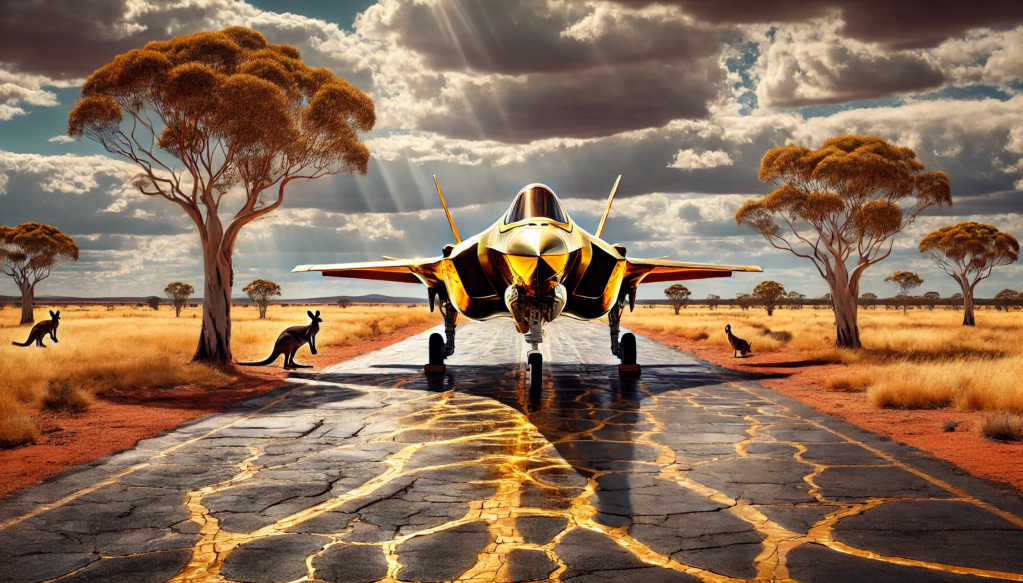
Australia has also overlooked opportunities to co-develop lower-cost aircraft with countries like India. For instance, India’s HAL Tejas was offered to Australia in its Lead-in Fighter Trainer (LIFT) configuration to replace the Royal Australian Air Force’s BAE Hawk 127 trainer aircraft. However, Australia rejected this proposal, opting instead to upgrade its existing fleet.
Similarly, Sweden’s Saab JAS 39 Gripen, known for its capability to operate from rugged, short airstrips, could have been a viable alternative for Australia’s diverse terrain. The Gripen’s design allows for operations from dispersed locations, including public roads, providing strategic flexibility. Despite these advantages, Australia did not pursue this option, potentially missing out on a cost-effective and versatile aircraft well-suited to its unique operational environment.
Delayed Acquisition of MRLS and Self-Propelled Artillery
Despite the rise of drone warfare in Ukraine, artillery remains the dominant killer on the battlefield, accounting for an estimated 70-80% of casualties. The sheer volume of shells fired – often tens of thousands per day – underscores the continued relevance of tube artillery in high-intensity conflicts. However, this reliance brings significant logistical and stockpiling challenges, as seen in Ukraine’s ongoing struggle to secure enough 155mm rounds.
The Australian Defence Force (ADF) has faced significant challenges in acquiring cost-effective Multiple Launch Rocket Systems (MLRS) and self-propelled artillery systems, raising concerns about its preparedness for modern combat. Historically, procurement processes have been slow and fraught with delays. The LAND 17 artillery replacement program, which began in the early 2000s, suffered numerous setbacks. In 2010, the K9 Thunder self-propelled howitzer was selected as the preferred option, but the project was cancelled in 2012 due to budgetary constraints and shifting priorities.
Efforts to modernize artillery capabilities have continued to encounter obstacles. In 2021, the Australian government awarded a $1 billion contract to Hanwha Defense Australia for the production of 30 AS9 Huntsman 155mm self-propelled howitzers and 15 AS10 armoured ammunition resupply vehicles, to be built in Geelong, Victoria. However, the Defence Strategic Review later reduced the number of infantry fighting vehicles and artillery systems to be procured, reallocating funds to other defence initiatives.
Additionally, attempts to bolster domestic artillery manufacturing have faced setbacks. In 2024, DefendTex, an Australian defence company, entered negotiations to acquire Avibras, a Brazilian missile and artillery manufacturer, aiming to bring missile production capabilities to Australia. However, the Australian government declined financial support for the acquisition, and concerns about potential Chinese interest in Avibras further complicated the situation.
Meanwhile, Australia has committed to producing Guided Multiple Launch Rocket Systems (GMLRS), but recent battlefield reports from Ukraine suggest that Russian electronic warfare (EW) systems have heavily degraded the effectiveness of GPS-guided munitions, including GMLRS. If Australia moves forward with standard M30/M31 rounds, they could face similar vulnerabilities. The GMLRS-ER (Extended Range) variant may offer enhanced countermeasures, but it’s unclear if Australia will invest in these.
To bridge capability gaps, the reintroduction of 105mm artillery systems into the Australian Army Reserve has been proposed as a cost-effective fire support solution. However, the slow pace of artillery modernisation highlights the need for more efficient procurement processes to ensure the ADF is prepared for contemporary operational demands. If Australia is to future-proof its artillery capabilities, it must rethink its reliance on GPS-guided munitions, invest in alternative guidance systems and electronic warfare countermeasures, and prioritize robust conventional shell production to sustain high-intensity combat.
Lessons from Ukraine: The Value of Quantity and Simplicity
The Ukrainian conflict has underscored the strategic advantage of maintaining a substantial inventory of armoured vehicles that, while perhaps not cutting-edge, are robust, functional, and readily repairable. Russia’s capacity to field large numbers of such “good enough” armoured systems, coupled with efficient repair and recovery operations, has proven advantageous in sustaining prolonged combat operations.
Russian forces have demonstrated proficiency in conducting field repairs that meet factory standards, enabling swift redeployment of damaged equipment. For example, servicemen from the Russian Army Group East have successfully executed complex field repairs on tanks, tasks traditionally reserved for factory settings. This capability allows for rapid restoration of combat vehicles, minimising downtime and maintaining operational momentum.
Moreover, Russia has effectively leveraged its extensive Soviet-era stockpiles to replenish losses. The Russian armed forces continue to refurbish tanks and armoured vehicles from storage to replace losses incurred in ongoing combat operations. This approach underscores a pragmatic strategy of utilising available resources to sustain military operations over extended periods.
In contrast, Australia’s defence procurement strategy has focused on acquiring a limited number of high-end platforms, which, while technologically advanced, may not be available in sufficient quantities to endure a protracted high-intensity conflict. This approach could potentially limit the ADF’s capacity to sustain prolonged operations, highlighting the need for a balanced procurement strategy that considers both quality and quantity.
The lessons from the Ukrainian conflict suggest that a diversified arsenal, inclusive of readily repairable and deployable armoured systems, can provide a strategic advantage in enduring high-intensity warfare. Adopting such an approach could enhance Australia’s defence posture by ensuring that its forces are both technologically equipped and numerically sufficient to meet the demands of modern combat scenarios.
Strategic Recommendations: Reforming ADF Procurement & Capability Development
To address these challenges, Australia must undertake comprehensive reforms across short, medium, and long-term horizons:
Short-Term (1-2 years):
- Establish dedicated procurement and logistics project management teams to ensure accountability in major projects.
- Prevent over-specification of requirements, which has historically led to costly delays (e.g., the Super Seasprite helicopter failure).
- Accelerate adoption of emerging technologies through direct engagement with local defence startups and rapid prototyping programs.
- Conduct an immediate stockpile assessment of munitions and critical assets to ensure readiness for high-intensity conflicts.
Medium-Term (3-5 years):
- Develop domestic production capabilities in drone technology, electronic warfare, and long-range strike capabilities.
- Shift procurement strategies away from costly prestige projects towards cost-effective, flexible military systems.
Long-Term (5-10 years):
- Cultivate strategic foresight by establishing dedicated think tanks and advisory bodies to anticipate future warfare trends.
- Reform military leadership structures to prioritise adaptability and innovation.
Conclusion
Australia’s current defence posture reflects a concerning misalignment with the realities of modern warfare. The lessons from the Ukrainian conflict serve as a stark reminder of the necessity for agility, technological integration, and strategic foresight. Without substantial reforms in military procurement, strategy, and leadership, Australia risks being unprepared for the wars of the future.



 The Lowdown
Leave a comment